
Kelly Slater Is Still Trying to Be a Better Surfer Than He Was Last Year
New here? Get the next one.
One email, no schedule.
From Kelly Slater (b. 11 Feb 1972, Cocoa Beach, FL) — turned pro 1990; first World Title 1992, age 20 (youngest champion at the time); eleventh World Title 2011, age 39 (also the oldest); missed the elite tour's mid-season cut in 2023, then competed as a tour wildcard every season since; in 2026, at 54, defeated Gabriel Medina at the Outerknown Tahiti Pro
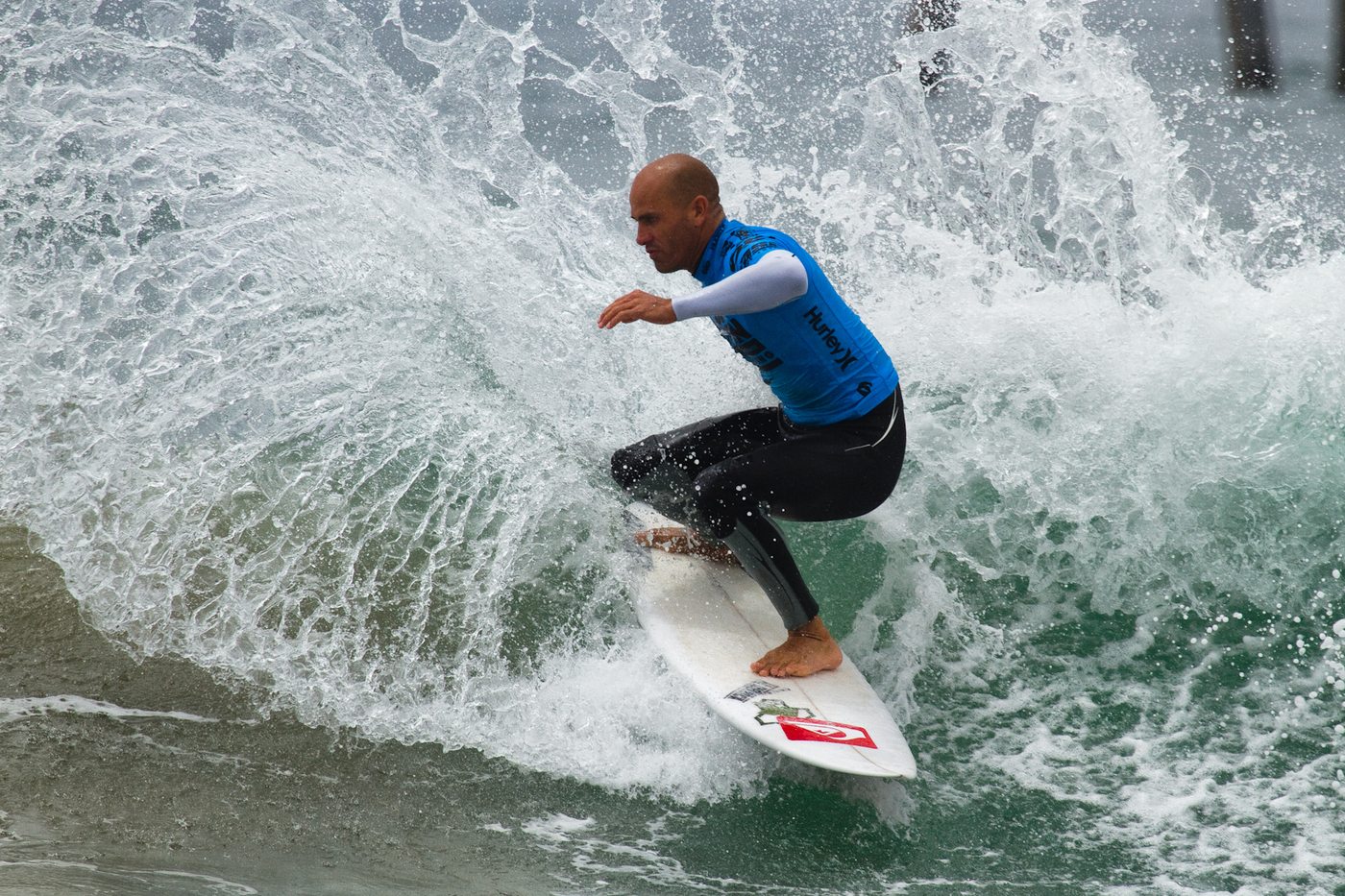
Kelly Slater grew up in Cocoa Beach, Florida, the son of a man who ran a bait shop, and he was in the water on a surfboard by age five. By ten he was winning age-division events up and down the Atlantic coast; by twelve he’d taken his first US age-division title. None of that reads as unusual for a talented kid with a beach in his backyard. What happened next is the part that does.
He turned pro at eighteen and immediately found out professional surfing doesn’t care how good you were as a kid — he finished 90th in the world his first year, 43rd his second. A career that started with two mediocre pro seasons is not the origin story anyone would have predicted for the winningest surfer in history, which is exactly the point: 1992 was not inevitable. It was a breakthrough, three podium finishes in his first five events that year, a maiden tour win in France, and then a win at the punishing Pipeline Masters in Hawaii that clinched his first World Title at twenty — the youngest champion the sport had ever had.
Most stories stop there. His didn’t. He kept competing, kept losing seasons too, kept showing up on tour for nearly two more decades, and in 2011 — nineteen years and ten world titles into a career most athletes would have long since called finished — he won an eleventh, at thirty-nine, becoming both the youngest and the oldest man ever to hold surfing’s championship. The first title and the eleventh weren’t bookends on the same achievement. They were two points on a line that never stopped moving.
In 2023, in his early fifties, he missed the tour’s mid-season cut — the sport’s own official verdict that his run at the elite level was over. He didn’t take the hint: granted a wildcard for the rest of that season, he kept paddling out as a wildcard every season since, through 2024 and 2025, and in 2026, at fifty-four, dismantled three-time world champion Gabriel Medina in a near-perfect heat at Teahupo’o, one of the heaviest, most dangerous waves on the planet. He’s said he’d like to keep competing for another decade, even if not always at the Tour level.
Ask him why and he doesn’t reach for a finish line. “When I’m 50, I want to be a better surfer than I am now — for me, it’s a lifelong journey,” he’s said. Elsewhere: “Surfing is my first love. It saved my life in a lot of ways. It is like a real interpersonal relationship with the ocean and with all the friends I’ve made.” And the line that dismantles the whole idea of retiring from something you love: “Everyone who retires from surfing just goes surfing more.”
Most of us treat our best year as the year we point back to for the rest of our lives. Slater’s own record refuses that shape on both ends — the twenty-year-old’s title didn’t finish the story, and the fifty-four-year-old wildcard entry isn’t a nostalgia lap either. Paddling out is something millions of ordinary people already do on an ordinary vacation. Anyone who has ever caught one real wave already knows, in miniature, the feeling he’s describing as the entire point of a fifty-year career: there’s always a better version of the same simple thing tomorrow, if you go back out and look for it.
If this was useful, the next one will be too.
One short essay when it’s ready. No schedule, no spam, no tracking.